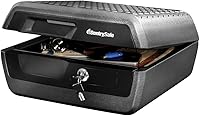
Fireproof Safe for Home: A Complete Guide
Choose a fireproof safe for home by matching its fire protection to your contents, then checking water protection, usable space and installation. Pick a dial or keypad safe for mixed valuables, or a file box when organized papers are your main need.
On this page (12 sections)
- What does “fireproof” mean on a home safe?
- Does a fireproof safe protect against water?
- What should you keep in a fireproof home safe?
- What size fireproof safe do you need?
- Which lock and installation details matter?
- Which fireproof safe for home fits each need?
- How should you compare safes before buying?
- Where should you place a home safe?
- How should you set up and care for a home safe?
- What mistakes should you avoid with a fireproof home safe?
- What are the limits of a fireproof home safe?
- Which fireproof safe for home should you choose?
A fireproof safe for home should protect the items you cannot easily replace, fit their actual size and work in the place you plan to install it. Start with fire protection for your contents, then compare water protection, storage layout and access.
For mixed papers and valuables, the SentrySafe SFW123DSB and SFW123GDC offer a choice between dial and keypad access. The HD4100 suits organized files, while the Amazon Basics option serves a different need: lockable storage without confirmed fire protection.
No safe promises protection in every emergency. A useful choice combines defined protection limits with sensible placement, secure installation and copies of essential records elsewhere.
For the wider range of storage choices, see our home safes guide.
What does “fireproof” mean on a home safe?
“Fireproof” means you should check the conditions behind the claim, including duration, temperature and covered contents. The word alone does not tell you how a safe will protect your papers or valuables.
A stated fire duration describes protection under defined conditions. It is not a countdown that tells you how long contents will survive in any house fire.
Actual exposure can vary with the fire's location, intensity and length. A safe's condition, closure and installation also matter, so follow its instructions rather than relying on the label alone.
Look for a named classification or verification and enough detail to compare models. “Fireproof steel safe” without supporting conditions gives you little basis for choosing emergency document storage.
Our guide to what a 1-hour fireproof safe rating means explains how to read the time claim without treating it as a universal promise.
Is “fire resistant” different from “fireproof” for a home safe?
Neither term establishes a protection level by itself. The stated conditions matter more than the label, so compare the same details even when brands use different words.
Also separate heat protection from burglary protection. A fire classification does not tell you how long a safe resists tools, and a thick steel door does not establish fire protection.
Avoid choosing by the longest duration alone. A safe still needs to protect your particular contents, fit your folders and be practical to install.
Does a fireproof home safe protect every type of media?
No, paper protection does not cover every storage medium automatically. Photos, drives and other items can have different storage needs, so match the protection claim to the exact contents.
Coverage for DVDs or USBs should not be stretched to include all electronics. A hard drive containing your only family photo archive needs its own backup plan.
Read how a fireproof safe may protect hard drives and photos before treating a document safe as media storage.
Does a fireproof safe protect against water?
Only when it has separate water protection. Fire protection does not establish resistance to floods, burst pipes or water used to control a fire.
Compare any stated depth and duration together. Protection for shallow water over a set period does not mean indefinite submersion or protection at any depth.
The way the safe must be closed also matters. Read the operating instructions so you know which latches or locks must be engaged to maintain the intended protection.
Location remains part of the decision even with a water-protected safe. A low basement corner and a dry interior closet can expose the same safe to very different conditions.
Do not drill extra holes or alter seals to make installation easier. Use only the mounting method allowed for that model, because changes can affect its protective construction.
Our guide to whether fireproof safes are waterproof explains why these claims need separate checks.
What should you keep in a fireproof home safe?
Prioritize original records, hard-to-replace papers and selected valuables you would need after an emergency. Sort the contents before choosing a safe so you buy for a real storage need.
Useful candidates include birth certificates, passports, property records, insurance papers and documents needed to identify accounts. Keep only what belongs in secure storage rather than moving an entire filing cabinet into a small safe.
Group papers by purpose: identity, property, insurance and estate records. Clear folder labels make it easier to retrieve one document without spreading everything across the floor.
Keep a secure record of essential contacts outside the safe too. Insurance details are less useful if the only copy is inside a safe you cannot reach after damage to the home.
Discuss access to estate documents with the relevant person before storing the originals. A secure location must still allow the right person to retrieve them when needed.
For a fuller sorting checklist, see what to put in a home safe.
Separate originals from backups
Use the safe for physical originals and a separate secure location for copies. Scanned records can help with recovery, but they do not replace every original document.
For digital files, keep another copy away from the home or in a suitable secure online service. A backup beside the original can be lost in the same event.
If several people share the household records, agree on who can access them. Document access should not depend entirely on one person's memory.
What size fireproof safe do you need?
Choose size by measuring your contents and their containers, then allow room to retrieve them. Cubic capacity alone cannot tell you whether a folder, binder or keepsake box will fit.
Make a stack of the items you plan to store. Include protective sleeves, envelopes and folders, since these can add enough width or depth to change your choice.
Measure the largest rigid item first. A narrow interior may hold loose pages but fail to accept the binder or document case you actually use.
Compare usable width, depth and height with the door opening and internal layout. Shelves and drawers help separate contents, but they also affect where larger objects can go.
Plan for papers without folding them
Check folder size rather than paper size alone. Tabs, envelopes and hanging-folder frames can extend beyond the sheets they hold.
Legal-size papers need a separate fit check. Do not assume that a safe described as suitable for documents will hold them flat.
If you regularly add records, leave room for that growth. A safe packed tightly from the first day makes filing awkward and encourages you to leave new documents outside.
Match the shape to your routine
A top-opening file box suits someone who wants to lift a lid and find labeled folders. A front-opening safe can be more practical for separate stacks, small boxes and mixed valuables.
Think about the position where you will use it. Retrieving files from floor level may be uncomfortable, while a cabinet door needs clear space in front.
Choose a layout that lets you remove one item without unloading everything. Easy access helps keep records in the safe between uses.
Which lock and installation details matter?
Choose a lock you can operate reliably and an installation method suited to the location. Access, anchoring and clearance deserve as much attention as storage capacity.
A familiar lock style can be more useful than extra features you will rarely use. Consider lighting, hand movement, code management and who needs authorized access.
Dial combination locks
A dial suits someone who prefers a mechanical entry routine. You must be comfortable following the turning sequence and reading its markings in the intended location.
Try the motion before settling on a tight corner or low position. A lock that is awkward to see or reach will be awkward every time you need a document.
Keep the combination in a secure place separate from the safe. Do not leave it on a nearby shelf or attach it to the door.
Electronic keypad locks
A keypad suits someone who prefers entering a code and accepts battery care as part of ownership. Choose a code that authorized users can remember without making it easy to guess.
Check how batteries are replaced and what happens if power runs low. Understand the role of any key, since a secondary locking key is not automatically an emergency override.
Keep spare batteries available outside the safe. Follow the specified battery type instead of assuming any cell that fits will work equally well.
Key locks
A key lock suits simple document storage when you have a clear plan for keeping the keys secure. Its convenience depends on finding a key when needed.
Store the spare away from the primary key. Keeping both together removes much of the benefit of having a backup.
Which fireproof safe for home fits each need?
Choose the SentrySafe cabinet models for mixed contents, the HD4100 for hanging files, or the Amazon Basics safe when lockable storage is the main goal. Their layouts and protection claims serve different buyers.
The 3 SentrySafe options below have stated fire protection. The Amazon Basics model is included to clarify why more interior volume and steel construction do not make a safe a fire-protection choice.
SentrySafe SFW123DSB: for households that prefer a dial
The SentrySafe SFW123DSB suits someone storing household documents and selected valuables who prefers a dial combination. It combines a shelf with space for mixed contents rather than arranging everything around hanging files.
SentrySafe specifies UL Classified protection for 1 hour at 1700°F and ETL Verified protection for 24 hours in water up to 8 inches deep. It is also ETL Verified to remain closed after a 15-foot fall during a fire.
The steel body has 4 live-locking bolts and a pry-resistant hinge bar. These are useful security features, but they do not establish a burglary-resistance classification.
Its interior measures 12.6 in W x 11.9 in D x 13.8 in H. The exterior is 16.3 in W x 19.3 in D x 17.8 in H, and the safe weighs about 86 lb.
Choose it for a dial-based storage routine and a shelf for separating papers from small valuables. Before buying, check that your folders fit without bending and that the delivery route can handle the weight.
Skip it if you strongly prefer keypad entry or mainly want quick access to hanging files. It also needs a planned installation location rather than a shelf chosen after delivery.
Compare the SFW123DSB and SFW123GDC if the lock style is your main remaining decision.
SentrySafe SFW123GDC: for frequent access in a dim location
The SentrySafe SFW123GDC suits someone who prefers a keypad and wants help seeing small contents inside. Its interior light and locking drawer give it a clear role for households storing papers alongside smaller valuables.
It shares the DSB's stated fire, water and fall protection, capacity and main cabinet dimensions. The useful distinction is the access and organization package, which also includes a backlit keypad, key rack, door tray and door pocket.
The safe has 4 live-locking bolts, a pry-resistant hinge bar and bolt-down hardware. Its door requires 14.75 in of clearance to open fully, so include nearby furniture and closet doors in your measurements.
SentrySafe recommends 4 high-quality, name-brand alkaline AAA batteries with expiration dates 8–10 years ahead. Treat battery replacement as routine care, and learn the secondary key's role before loading important contents.
Choose it when you expect to open the safe often enough to value the keypad and light. The drawer can help keep small items apart from document stacks.
Skip it if you want to avoid battery upkeep or have no use for the added organization features. For occasional paper retrieval, a simpler access system may fit your routine better.
Read our SFW123GDC review for a closer look at this model.
Amazon Basics 1.8 Cu Ft Safe: for lockable household storage
The Amazon Basics 1.8 Cu Ft Safe suits someone whose main need is organized, lockable storage for documents, jewelry, cash or devices. Do not choose it to meet a fire-protection requirement, because no fire classification is established here.
It has a programmable electronic keypad, backup key and interior shelf. Construction includes an 8-gauge steel door, a 14-gauge steel body, 2 live-door bolts and pry-resistant concealed hinges.
The exterior measures 13.8 in W x 13 in D x 19.7 in H. Inside, the dimensions are 13.62 in W x 10.35 in D x 19.53 in H, so check depth as carefully as total volume.
Pre-drilled holes and mounting hardware support floor or wall installation. Choose the mounting location according to the instructions and the structure available, rather than attaching it to a convenient thin panel.
Choose it when you need a taller storage space and understand its role as a security safe. It can separate valuables from ordinary household storage without making a fire-protection promise.
Skip it if safeguarding irreplaceable papers from fire is the reason you are buying. A steel shell, keypad and larger capacity cannot substitute for a suitable fire classification.
For more detail, read our Amazon Basics steel safe review.
SentrySafe HD4100: for households organizing essential papers
The SentrySafe HD4100 suits someone whose main task is keeping important papers in labeled hanging folders. Its top-opening box format favors document filing over mixed storage on shelves.
SentrySafe specifies UL Classified fire protection for up to 30 minutes and ETL Verified protection during water exposure. Do not assume its water conditions match those of the 2 cabinet safes above.
The box has a 0.65 cu ft capacity and an interior measuring 12 in W x 8.1 in D x 11.5 in H. Outside, it measures 15.5 in W x 13.5 in D x 14.3 in H and weighs about 39 lb.
Its key lock comes with 2 keys. Plan secure key storage and leave enough room above the box to open the lid and lift folders out.
Choose it for a focused document system with separate folders for identity, property and insurance records. That layout makes more sense than a larger cabinet when papers are nearly all you need to protect.
Skip it if you need the longer stated fire duration of the cabinet models or space for bulky mixed contents. Its weight also makes “portable” a poor reason to assume everyone in the household can carry it easily.
Compare other fireproof document boxes if this format matches your storage plan.
How should you compare safes before buying?
Compare each safe against the same written checklist, starting with contents and protection. Eliminate models that miss a basic requirement before weighing convenience features.
| Check | What to confirm | Common buying mistake |
|---|---|---|
| Contents | Papers, valuables or specific media | Assuming all contents need the same protection |
| Fire protection | Duration, temperature and covered contents | Choosing by the word “fireproof” alone |
| Water protection | Depth, duration and closure instructions | Assuming fire protection includes water |
| Interior fit | Folder size, usable dimensions and layout | Comparing cubic capacity alone |
| Access | Lock routine, keys and battery care | Ignoring who will use the safe |
| Installation | Support, approved anchoring and clearance | Choosing the location after delivery |
| Recovery plan | Copies and access details stored elsewhere | Keeping every essential copy together |
Write down your nonnegotiable needs first. If flat document storage is essential, a safe that forces folded papers is the wrong fit even if it offers other appealing features.
Check the exact model rather than transferring features from a similar name. For a step-by-step selection process, use our guide to how to choose a fireproof home safe.
Where should you place a home safe?
Choose a dry, supported and accessible location where the safe can be installed as directed. Consider how you will use it after installation as well as how it will get there.
Measure doorways, narrow turns and stairs along the delivery route. The safe must reach its final position without relying on unsafe lifting or damaging the home.
At the location, allow space for the door or lid, your hands and the items you will remove. A cabinet can fit in a closet yet remain frustrating to use if the door cannot open properly.
Avoid likely water collection points where practical. Placing a safe higher is useful only when the support and mounting arrangement are suitable for its weight.
Do not treat ordinary furniture as a safe stand without checking its load capacity and stability. A heavy safe needs secure support, including while its door is open.
Plan anchoring before delivery
Use the manufacturer's approved attachment points and method. Included hardware does not mean every floor or wall material is suitable without further planning.
If you rent, settle mounting permission before buying a model whose intended installation requires drilling. The right location must work with both the safe's instructions and the building.
Keep the safe accessible enough that you will return papers after use. A hidden location that discourages routine filing can leave the most recent records unprotected.
How should you set up and care for a home safe?
Learn the lock and closure routine before loading valuable contents, then keep the interior organized and dry. Small care habits make the safe easier to use and reduce avoidable access problems.
Follow the instructions for initial setup, code changes and any secondary lock. Confirm that authorized users understand the opening process before putting essential originals inside.
Open and close the empty safe several times in its final position. Check that nearby objects do not block the handle, door, lid or locking action.
Keep folders and seals clear
Arrange contents so nothing catches in the closing edge. Folder tabs, straps and loose envelopes should stay clear of the door, lid and locking mechanism.
Wipe away ordinary dust and inspect the closure area as directed. Avoid adding oils, cleaners or seal treatments unless the manufacturer allows them.
Keep liquids and damp papers out of the interior. If moisture is a concern, follow the manufacturer's guidance on airing the safe and using a suitable moisture-control product.
Build a simple access routine
Return keys to their secure location after use. For keypad models, replace batteries according to the instructions and check operation before low power becomes an access problem.
Review contents when major records change. Remove expired duplicates, add current insurance papers and update the separate recovery information kept elsewhere.
Our guide to storing important documents at home helps turn the safe into part of a workable filing system.
What mistakes should you avoid with a fireproof home safe?
Avoid buying for a headline feature while missing the actual storage job. Most preventable mismatches come from unclear contents, poor fit or an access plan that does not work for the household.
Do not confuse weight with a burglary classification. A heavy safe still needs the appropriate installation, and fire protection does not establish resistance to forced entry.
Do not overfill the interior. Tight stacks make retrieval harder and can put papers in the way of proper closure.
Do not lock the only access instructions or recovery information inside. Keep sensitive details secure elsewhere, with a plan for an authorized person to find them.
Do not assume a movable box is an emergency evacuation tool. Choose it for storage and manageable relocation during normal use, rather than depending on retrieving it during a fire.
After fire or flood exposure, follow emergency guidance and contact the manufacturer before handling or opening a damaged safe. A closed door does not tell you that the safe is cool or safe to touch.
What are the limits of a fireproof home safe?
A fireproof home safe provides protection within stated conditions, so it should be one part of your records plan. It cannot replace separate backups, suitable security or safe evacuation.
For a closer explanation of those limits, read whether fireproof safes are really fireproof.
Keep copies of essential records elsewhere and maintain a separate digital backup where appropriate. Spread the recovery information so loss of access to the home does not also remove every account detail and contact.
A safe also cannot make unsuitable storage suitable for every object. Check special care needs for delicate valuables and media before placing them alongside papers.
During an emergency, leave the safe and its contents behind. The purpose of protected storage is to reduce the need to retrieve possessions when leaving the home.
Which fireproof safe for home should you choose?
Choose the SFW123DSB for dial access, the SFW123GDC for keypad convenience and interior organization, or the HD4100 for hanging files. Choose the Amazon Basics model only when lockable storage meets your need without fire protection.
Make the final choice in this order: confirm protection for your contents, check their fit, then settle access and installation. Reject any option that fails one of those basic needs, even if its other features appeal to you.
For a fireproof safe for home, the best fit is the one you can install correctly, keep organized and use consistently. Compare our best fireproof safes for home once you have your contents list and location measurements ready.
Frequently asked questions
What should I look for in a fireproof safe for home?
Start with fire protection that matches your contents, then check water protection and usable interior space. Compare lock type, anchoring instructions and door clearance before choosing a location.
Measure your document folders and delivery route too, because outside dimensions and total capacity do not show whether everything will fit.
Are fireproof home safes also waterproof?
No, fire protection and water protection are separate features. Check the exact water depth and exposure time covered for each model rather than relying on the word waterproof.
Placement still matters, since a safe in a low spot may face deeper water than its stated protection covers.
Is a fireproof safe better than a document box?
Choose a document box for organized papers and a cabinet-style safe for mixed contents when its layout suits them better. Neither shape establishes the level of protection.
Compare fire duration, water conditions, access and security features, then decide whether you need hanging folders, shelves or space for bulky items.
Can I store hard drives in a fireproof safe?
Use a safe for hard drives only when its protection specifically covers that type of media. A claim covering paper, DVDs or USBs does not establish protection for every storage device.
Keep a separate backup elsewhere so a single fire, flood or access problem cannot remove your only copy.
Where should I put a home safe?
Choose a dry, accessible location with suitable support, enough door clearance and a way to install the safe according to its instructions. Measure the delivery route before ordering.
Avoid likely water collection points, and do not place a heavy safe on furniture or shelving without confirming that the support is suitable.