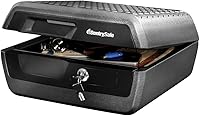
How to Choose a Fireproof Home Safe
To choose a home safe, match its fire protection, usable interior space, lock and mounting options to your contents. Check water protection separately, then measure the safe’s final location and the route into it.
On this page (10 sections)
- What should you decide before choosing a home safe?
- How do you compare a safe’s fire rating?
- How much interior space do you need?
- Do you need a fireproof safe to be waterproof?
- Which lock and security features fit your needs?
- Where should you place a home safe?
- Which home safe type fits your contents?
- How should you set up and care for a home safe?
- Which common mistakes should you avoid?
- How to choose a home safe that fits your priorities
To learn how to choose a home safe, start with your contents and the risks you need it to address. Then compare fire protection, usable space, access and installation in that order.
A safe for family papers needs a different layout from one for jewelry or devices. A larger steel cabinet also does not become a fire safe simply because it has a strong-looking door.
For a broad overview of options, see our fireproof and waterproof home safe guide. Use the steps below to narrow those options to a safe that fits your home and storage routine.
What should you decide before choosing a home safe?
Decide what goes inside and which losses you need to prevent before choosing a model. Fire, water and unauthorized access are separate problems, even when one safe addresses all 3.
Make a short inventory rather than shopping from memory. Group the contents into papers, small valuables and electronic items, then mark anything that would be difficult to replace.
Include the folders, envelopes and protective cases you plan to use. A passport by itself takes little space, but a household’s passports, certificates and insurance records can become a substantial bundle.
Next, name your main concern. Someone protecting birth certificates from a house fire should prioritize documented fire protection, while someone restricting casual access to valuables may prioritize mounting and a convenient lock.
Give your safe one clear job before adding secondary uses. This keeps extra capacity or an interior light from distracting you from the protection you actually need.
Also decide who must be able to open it. A safe holding shared family records needs an access plan that still works when the person who normally manages it is away.
How do you compare a safe’s fire rating?
Compare the named classification, duration and intended contents before comparing temperature claims. The word “fireproof” alone is not enough to choose between models.
A fire classification describes performance under defined conditions. It does not promise that every item will survive every house fire, regardless of heat, duration or damage to the building.
SentrySafe’s SFW123DSB is UL Classified for 1 hour at 1700°F. The HD4100 is UL Classified for up to 30 minutes.
Pockrif claims its Small 35-Minute Fireproof Safe withstands up to 1800°F for 35 minutes. That manufacturer claim is not equivalent to a named independent classification.
Don’t rank these safes by the highest temperature number alone. A shorter duration at a higher temperature does not automatically provide better protection than a longer classified duration.
Read what a 1-hour fireproof safe rating means before using a time label as your deciding factor. Our explanation of whether fireproof safes are really fireproof covers the limits behind the label.
How to choose a home safe fire rating for your contents
Choose a home safe fire rating that covers the materials you will store, not just the outside conditions. Paper, photographs and electronic media do not all tolerate heat and moisture in the same way.
For documents, look for protection intended for paper records. For drives, memory cards or other media, confirm coverage for that specific type of item rather than assuming document protection extends to everything inside.
SentrySafe names documents, valuables, DVDs and USBs among the SFW123DSB’s intended contents. That should not be stretched into a promise covering every electronic device or storage format.
Keep separate backups of important digital records. A single safe should not hold the only copies of family photos, financial records or other files you cannot recreate.
How much interior space do you need?
Choose usable dimensions before cubic-foot capacity. Your largest folder or case must fit through the opening and sit inside without being crushed or blocking the door.
Measure the width, depth and height of your contents as you will store them. For paper records, measure the folder or binder rather than a loose sheet.
These interior measurements help separate the larger options:
| Safe | Interior width | Interior depth | Interior height |
|---|---|---|---|
| SentrySafe SFW123DSB | 12.6 in | 11.9 in | 13.8 in |
| SentrySafe HD4100 | 12 in | 8.1 in | 11.5 in |
| Amazon Basics 1.8 Cu Ft Safe | 13.62 in | 10.35 in | 19.53 in |
The SFW123DSB and Amazon Basics safe have shelves, while the HD4100 is designed around hanging files. A shelf helps separate small valuables, but it also divides the available height.
Allow room to lift out a folder or remove a jewelry case without emptying everything else. A safe packed to its edges may hold your belongings yet be awkward to use.
Leave some room for future records, but don’t buy a much larger safe without checking its placement. Outside dimensions can grow quickly because protective walls take up space.
Check the home safe size guide for help planning the layout. If your inventory is still unclear, start with what to put in a home safe.
Do you need a fireproof safe to be waterproof?
Choose water protection separately from fire protection. Flooding, plumbing leaks and water used to fight a fire can threaten contents even when heat is your main concern.
Look for stated exposure limits rather than treating “water resistant” and “waterproof” as interchangeable promises. Depth, duration and any installation conditions all matter.
The SFW123DSB is ETL Verified for 24 hours in water up to 8 in deep. The HD4100 also has ETL Verified water protection, but confirm its depth and duration with SentrySafe if those limits will decide your choice.
The Amazon Basics safe has no stated fire or water protection in the supplied specifications. Pockrif describes its compact safe as water resistant, without a verified depth and duration here.
Choose a model with suitable verified water protection when flooding is a main concern. A general water-resistance description is not enough for that job.
See whether fireproof safes are waterproof for more detail. Even with water protection, avoid placing a safe directly beneath plumbing where a leak could go unnoticed.
Which lock and security features fit your needs?
Choose an access method you can manage reliably, then consider construction and mounting. A lock that becomes a daily nuisance can lead to careless habits, such as leaving the door open.
A dial combination suits someone comfortable with a deliberate opening routine. It removes keypad battery changes from that routine, but the user still needs to remember and enter the combination correctly.
A keypad suits frequent access and avoids carrying a key for ordinary use. It also requires a battery plan and careful handling of any backup key.
A key lock is simple to share between authorized users, but key storage becomes part of the safe’s security. Keeping a spare beside the safe makes it easy for someone else to gain access.
The Amazon Basics model uses AA batteries, which are not included. Pockrif’s compact model allows battery replacement through the exterior lock panel and includes emergency backup keys.
For a closer look at daily use, read our digital keypad versus dial combination safe comparison. Choose around the people using the safe, including anyone who may struggle to see a dial or operate small controls.
What makes a safe harder to remove?
Proper anchoring helps keep someone from carrying the whole safe away. Weight helps with placement decisions, but it should not replace an installation plan.
The SFW123DSB has 4 live-locking bolts, a pry-resistant hinge bar and bolt-down hardware. The Amazon Basics model has an 8-gauge steel door, a 14-gauge steel body, 2 live-door bolts and concealed hinges.
These features describe construction, not a proven level of resistance to every attack. Don’t assume a fire classification also establishes burglary resistance.
Before choosing a safe for high-value jewelry or similar items, ask your insurer whether it requires a particular security certification or installation method. That requirement can narrow your choices more than capacity or lock style.
Where should you place a home safe?
Choose a spot that is discreet, accessible and suitable for installation. Measure the full route into place, plus the space needed to open the door or lift the lid.
Check stairs, tight turns and cabinet openings before delivery. A safe that fits its final space may still be difficult to move through the home.
The SFW123DSB weighs about 86 lb, while the HD4100 weighs 38.8 lb. Arrange suitable moving help rather than planning to lift either one alone through an awkward route.
For a top-opening file box, leave enough room above it to raise the lid and lift folders out. A low shelf may fit the closed box while making its contents hard to reach.
For a front-opening safe, check the door swing and your working position. You should be able to read the controls and remove contents without reaching blindly into a dark corner.
Mount into a suitable structural surface as instructed, rather than assuming a thin cabinet panel provides secure anchoring. If you rent, check your agreement before drilling into floors or walls.
Don’t add holes to solve a placement problem. Changes to a safe’s protective shell can affect the protection you bought it for.
Which home safe type fits your contents?
Choose a file box for organized papers, a shelf-equipped safe for mixed contents or a compact safe for a small inventory. The following models suit different buyers, so start with the job each one does best.
SentrySafe HD4100: for organized family records
The HD4100 suits households that want important papers arranged in hanging folders. Its 0.65 cu ft interior is aimed at document organization rather than a tall stack of mixed valuables.
Choose it for birth certificates, insurance records and other papers you need to find by category. The key lock includes 2 keys, allowing you to plan separate primary and backup access.
Its main advantage is the file layout. Keeping records grouped by subject can make retrieving a needed document easier than searching through loose envelopes.
Skip it if mounting against removal is your main requirement, or if you need room for bulky cases and devices. Its compact footprint does not make it a lightweight carry box, so plan where it will stay.
SentrySafe SFW123DSB: for documents and mixed valuables
The SFW123DSB suits buyers who want fire and water protection alongside space for papers and smaller valuables. Its 1.23 cu ft interior and shelf provide a more flexible layout than a dedicated hanging-file box.
Choose it if you prefer a dial and can commit to a permanent location. Keep small items in separate cases or envelopes so they remain easy to find beside document folders.
SentrySafe also states ETL verification for a 15-foot fall during a fire while remaining closed. That feature concerns closure during that event, not protection from careless moving or dropping.
Skip it if you need frequent relocation or cannot accommodate its weight and door clearance. Buyers wanting quick keypad entry should choose around that preference before committing to a dial.
Amazon Basics 1.8 Cu Ft Safe: for larger locked storage
The Amazon Basics safe suits buyers who need more room for valuables and prioritize controlled access. Its 1.8 cu ft capacity is the largest of these 4 options.
Choose it for a mix of jewelry cases, documents and other belongings when locked storage is the main goal. The shelf separates items, and pre-drilled holes with hardware support floor or wall mounting.
Plan backup-key storage before putting valuables inside. The backup method only helps if you can reach it without opening the safe.
Skip it if fire or flood protection is essential. Extra room and steel construction do not fill that gap, so choose a model with the protection your contents need.
Small 35-Minute Fireproof Safe: for limited storage space
Pockrif’s compact safe suits someone storing a small set of passports, cash or jewelry in a tight space. Its 0.5 cu ft capacity calls for a short, measured inventory.
The interior light helps you find small items, and an alarm activates after repeated incorrect code attempts. Neither feature replaces secure mounting or careful code management.
The safe includes expansion bolts and mounting holes with factory-installed metal plugs. Follow Pockrif’s instructions for handling those plugs and preserving protection during installation.
Skip it if you need full-size folder storage or independently classified fire protection. Confirm usable interior width and height before choosing it for documents, since the outside footprint does not establish what fits inside.
How should you set up and care for a home safe?
Set up the safe before filling it, then build a simple access and care routine. This catches fit or access problems while the contents are still easy to reach.
- Read the installation instructions. Confirm the surface, mounting points and any conditions affecting fire or water protection.
- Check access with the door open. Practice the code, combination or key operation as the manual directs before relying on it with the door closed.
- Secure backup access elsewhere. Keep keys and recovery information outside the safe in a separate, controlled location.
- Arrange contents for retrieval. Label folders, separate small valuables and keep papers clear of hinges, bolts and the door.
- Check closure and access regularly. Make sure the door closes fully, remove debris from contact surfaces and follow the battery instructions for electronic locks.
Store documents dry and follow the manufacturer’s moisture-control advice. If contents feel damp or develop an odor, address the cause rather than sealing them away again.
Avoid spraying cleaners or lubricants into a lock unless the manual directs you to use them. Keep the instructions and model details somewhere accessible outside the safe.
Review the contents when family records change. Our guide to storing important documents at home can help you decide what needs an original, a copy or a separate backup.
Which common mistakes should you avoid?
Avoid choosing by capacity, temperature or appearance alone. Each of those can hide a mismatch between the safe and the job you need it to do.
- Buying from outside measurements. Protective walls and shelves reduce usable space, so measure your contents against the interior.
- Treating all fire claims alike. A manufacturer’s duration claim and a named independent classification provide different grounds for a decision.
- Ignoring removal risk. A hidden, unanchored safe may still be carried away if someone finds it.
- Storing backup keys inside. Emergency access must remain available when the main lock cannot be used.
- Overfilling the safe. Papers and cases should not prevent full closure or interfere with locking parts.
- Keeping every copy together. Store important backups separately so one incident does not affect them all.
Don’t buy a fire safe just to hide valuables, or a security cabinet just to protect papers from heat. Choose the protection first, then the size and convenience features.
How to choose a home safe that fits your priorities
The final rule for how to choose a home safe is to reject any model that misses your most important protection need. Then choose the smallest workable layout that leaves room for organized access and future records.
Choose the SentrySafe SFW123DSB for mixed documents and valuables when classified fire protection, verified water protection and a dial suit your needs. Choose the HD4100 when hanging-file organization is the main job.
Choose the Amazon Basics 1.8 Cu Ft Safe for larger locked storage when fire and flood protection are not requirements. Consider Pockrif’s compact safe for a small inventory when you accept its manufacturer-stated fire protection.
Before ordering, place your planned contents together and measure them one last time. Use our fireproof and waterproof home safe guide to compare the options that meet your protection needs.
Frequently asked questions
How do I choose a home safe?
Choose a home safe by matching its protection, usable space and access method to your contents. Start with an inventory, measure your largest items, and decide whether fire, water or theft is the main concern.
Before ordering, confirm that the safe fits its location and can be installed as instructed.
Are all home safes fireproof?
No, some home safes provide locked storage without a stated fire classification. For fire protection, look for a named classification, its duration and the contents it covers.
Steel construction, a thick door or a digital keypad does not establish that papers or valuables will be protected during a fire.
Do I need a waterproof home safe?
Water protection matters if flooding, firefighting water or a plumbing leak could reach your safe. Check the depth and duration of protection instead of relying on the word waterproof alone.
Our fireproof and waterproof home safe guide explains the main choices, but placement away from likely leaks still matters.
What size home safe should I buy?
Buy enough usable space for your largest items in their folders or cases, with room to remove them easily. Compare interior dimensions, shelf clearance and the door opening rather than capacity alone.
Use our home safe size guide to plan around the contents you actually need to store.
Can I bolt a home safe to the floor?
You can bolt down a safe when its design and instructions allow floor installation. Use the approved mounting points and hardware suited to the surface, and check how installation affects fire or water protection.
Don’t drill extra holes through a fire-resistant safe unless the manufacturer expressly allows it.