How to Store Important Documents at Home
To store important documents at home, sort originals, use storage suited to fire and water risks, and keep copies in a separate place. Use a simple inventory so you can find or replace records when needed.
On this page (9 sections)
- What important documents should you keep at home?
- How should you organize important papers?
- Where should you store important documents at home?
- Should you use a safe, box, or document bag?
- How can you protect against fire and water damage?
- How should you make backup copies?
- How can you prepare documents for an emergency?
- How often should you review your document storage?
- How do you choose a practical home document system?
To store important documents at home, sort originals, use storage suited to fire and water risks, and keep copies in a separate place. Use a simple inventory so you can find or replace records when needed.
Start with the papers you would need to prove identity, manage property or money, get insurance help, or handle an emergency. Choose a storage location that is dry, secure, and easy for the right people to reach.
What important documents should you keep at home?
Keep the original records that are hard to replace, plus current copies of records you may need quickly. The right set depends on your household, property, work, and finances.
Common records to consider include:
- Birth, marriage, adoption, and name-change certificates
- Passports, identity documents, and citizenship records
- Property deeds, mortgage papers, lease agreements, and vehicle titles
- Insurance policies and claim details
- Wills, powers of attorney, and other estate documents
- Tax records and selected financial or business papers
- Medical directives and essential care information
Keep only records you need to retain. For tax, legal, and financial documents, check the relevant agency or professional guidance before discarding originals or older files.
How should you organize important papers?
Group documents by the task they support, then make a short inventory. A consistent system helps you locate a record without opening every folder during a stressful moment.
Use folders such as “Identity,” “Home and property,” “Insurance,” “Legal,” and “Taxes.” Label folders clearly, but avoid putting account numbers or other sensitive details on the outside.
Store loose papers in sleeves or folders that fit the container. Keep frequently needed records near the top, with less urgent papers behind them.
A multi-pocket organizer can help separate records, passports, cards, and small items. The DocSafe File Organizer with Lock has 13 accordion pockets, a main pocket, a zipper pocket, and a combination lock.
The accordion pockets hold letter and A4 papers, while the main pocket can hold legal-size files. For more options, see our guide to the best fireproof document boxes.
Where should you store important documents at home?
Store important papers in a dry, secure place away from common water sources and everyday clutter. Pick a location trusted adults in the household can find, while keeping sensitive records out of casual view.
Avoid damp basements, garages with temperature swings, and shelves beside plumbing or appliances that can leak. A high shelf may reduce exposure to some spills, but it can be hard to reach.
A home safe can offer controlled access and a defined storage spot. Read how to choose a fireproof home safe and consider whether your papers fit; a compact safe may not hold folders or legal-size documents.
Fire and water protection are different features. Read what fireproof and waterproof home safe labels mean before relying on a product for both hazards.
Should you use a safe, box, or document bag?
Choose storage based on the records, the risks, and how quickly you may need to move them. A safe, lockable organizer, or portable bag can each solve a different part of the problem.
Storing important documents at home in a safe
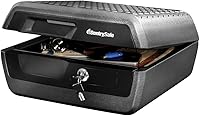
A safe may suit originals you want kept in one secured place. Check its document fire rating, size, anchoring guidance, and water protection; see what to keep in a home safe for help prioritizing its contents.
Using a document box or organizer
A document box or file organizer can make papers easier to sort and carry. The BALEINE Fireproof Document Box has a combination lock, dual zippers, and 12 mesh compartments, with dimensions of 15 x 11 x 4 inches.
Measure your documents and the space where you plan to keep the box. For a side-by-side choice among containers, bags, and safes, read which lock box, bag, or safe to buy for important papers.
Using a portable document bag
A portable bag can be useful for selected records you may need to carry. The Andyer Fireproof Document Bag has 2 zippered pockets and measures 15 x 11 inches.
A fireproof product name does not guarantee that papers will survive a fire. A bag is not a substitute for separate copies or a safe evacuation plan.
How can you protect against fire and water damage?
Use layers: keep the most important originals in suitable storage, and keep copies somewhere separate. No single container removes every risk, and fire protection does not automatically include water protection.
Check the exact model's protection standard, test conditions, and limits. A material flame test does not establish how long documents inside a container will remain protected.
Our guide explains what a 1-hour fireproof safe rating means, while whether fireproof safes are really fireproof covers the limits behind that label.
Water exposure can come from floods, sprinklers, or firefighting. Review whether fireproof safes are waterproof and do not assume protection from rain or spills includes protection during submersion.
Store the container off the floor if that fits your space and does not make it unsafe to reach. Keep it away from pipes, sinks, and likely leak paths, and inspect the area after storms or plumbing work.
How should you make backup copies?
Make secure digital copies of records you may need to replace or access quickly, then store them separately from the originals. For especially important papers, consider a second copy with a trusted person or in another secure location.
Scan or photograph each document clearly, including the full page and any relevant back side. Use descriptive file names, such as “Home insurance policy 2026,” rather than vague names like “scan 4.”
Protect sensitive files with encryption and a strong password. Turn on multifactor authentication for the account that stores them, and avoid leaving copies in public or shared folders.
Keep an inventory that says what you have and where the original and backup are stored. The inventory can use general labels without exposing full account numbers or other private details.
How can you prepare documents for an emergency?
Keep a small grab set separate from the full archive if you may need to leave home quickly. Include only records and contact details that would help with identification, insurance, travel, or urgent decisions.
Put the grab set in a secure, accessible spot that does not block an exit. Do not delay evacuation or put yourself at risk to retrieve documents during a fire, flood, or other emergency.
Tell another trusted adult where the main records and backups are stored. Update the inventory when you move, change insurance, or replace a key document.
How often should you review your document storage?
Review your papers once a year and after major life changes. Check that records are current, folders are still useful, and backup files can be opened.
Replace expired copies with current versions where needed, but keep older legal or financial records if retention rules require them. Remove duplicates only after confirming that an original or usable copy remains.
Check containers for moisture, damage, and working closures. Update passwords and access settings for digital copies when household access or accounts change.
How do you choose a practical home document system?
Choose home document storage that keeps originals sorted, backups separate, and urgent papers quick to reach. A locked organizer can suit grouped files, a bag can suit a portable set, and a safe can suit secured originals when its capacity and protection limits fit your needs.
The DocSafe File Organizer with Lock suits labeled filing, the Andyer Fireproof Document Bag suits a portable grab set, and the BALEINE Fireproof Document Box suits papers that need several compartments. Measure first and keep copies in another location.
For the wider choice of container types, compare a lock box, bag, or safe for important papers. Choose a system you can find, maintain, and explain to the people who may need it.
Frequently asked questions
What documents should I keep at home?
Keep records you may need to identify yourself, manage money or property, receive care, or handle an emergency. Common examples include identity and vital records, insurance policies, property or lease papers, tax records, and key account details.
Keep only what you need, and check retention rules before discarding legal or financial records.
Should I keep original documents in a fireproof safe?
A fire-resistant safe can add protection, but its rating and limits matter. Check the exact model's certification and instructions, and remember that fire ratings do not automatically mean waterproof.
Keep digital or paper copies elsewhere so one event is less likely to destroy every version.
Is a fireproof document bag enough for important papers?
A document bag can help organize selected papers, but it does not replace separate backups or a safe with a suitable document fire rating. A material flame test does not establish how long enclosed papers will survive a fire.
Keep the bag accessible, and never delay evacuation to retrieve it.
How should I back up important documents?
Scan or photograph records that are safe to store digitally, then keep encrypted copies in a secure account and a separate location. Use strong passwords and multifactor authentication, and avoid leaving sensitive files in a shared device folder.
Keep originals and backups organized with the same file names or inventory.