5 Best Digital Safe for Home (October 2026)
The best digital keypad safes for home include the SentrySafe SFW123GDC for document focused households, the Amazon Basics Keypad Lock Box for compact closet storage, and the Amazon Basics Digital Steel Safe for wider document storage.
On this page (7 sections)
- Which digital safe for home fits your needs?
- Best digital keypad safes for home
- How to choose a digital home safe
- How to set up your keypad safe before storing valuables
- How to care for a digital safe and avoid access problems
- Common mistakes when buying a digital safe
- Which digital safe for home should you choose?
The best digital safe for home is the SentrySafe SFW123GDC if you need keypad access plus fire and water protection for important papers and valuables. Choose a smaller steel safe when your main goal is keeping everyday belongings behind a code.
Start with what could go wrong: someone accessing your belongings, someone carrying the safe away, a fire or water damage. Each concern calls for different features, and a digital lock addresses only the access part.
Next, measure the items and the installation space. A safe that fits your closet can still be too shallow for your document folder or too awkward to open against a wall.
For help estimating capacity, see our home safe size guide. If you're comparing keypad access with a dial, our digital vs. combination safe guide explains the difference.
Our picks at a glance
-
1
-
2

-
3

- 4
 Check it
Bonsaii Electronic Keypad Safe
Best for backup power access - 5
 Best for bedside cash storageCheck it
Which digital safe for home fits your needs?
Choose the SentrySafe for fire and water protection, an Amazon Basics model for everyday storage, Bonsaii for external backup power or Voncabay for a few small belongings. The right choice depends on the risk you need to address and the shape of what goes inside.
The order reflects each safe's fit for home storage, including protection features, usable space, mounting and backup access. A lower-ranked safe can still be the better fit for a tight cabinet or a small storage task.
Before comparing capacity, write down your largest item and your intended mounting surface. Those two details can rule out an unsuitable safe faster than a long feature list.
| Product | Best for | Capacity | Exterior | Access | Our score |
|---|---|---|---|---|---|
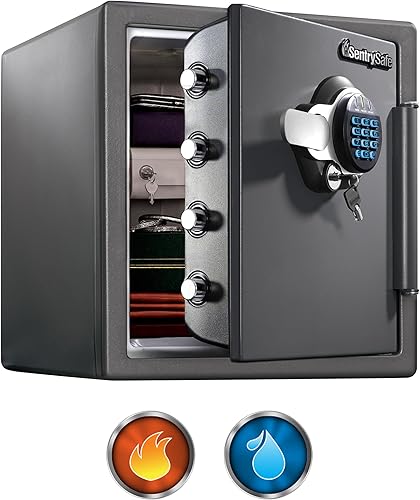
| SentrySafe SFW123GDC | document focused households | 1.23 cu ft | 16.3 x 19.3 x 17.8 in (W x D x H) | Digital combination and secondary locking key | 8.8 |
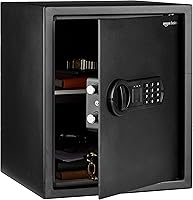
| Amazon Basics Keypad Lock Box | compact closet storage | 0.5 cu ft | 13.8 x 9.8 x 9.8 in (W x D x H) | Electronic keypad and 2 override keys | 7.9 |
| Amazon Basics Digital Steel Safe | wider document storage | 1 cu ft | 16.93 x 14.57 x 9.06 in (W x D x H) | Digital keypad and 2 override keys | 7.7 |
| Bonsaii Electronic Keypad Safe | backup power access | 0.6 cu ft | 13.78 x 9.84 x 9.84 in (W x D x H) | Personal code or override keys, with Type-C backup power | 7.3 |
| Voncabay Digital Money Safe | bedside cash storage | 0.23 cu ft | 9 in wide, about 6.6 in deep and high | Digital keypad and 2 emergency keys | 7.0 |
Best digital keypad safes for home
The SentrySafe leads for protected document storage, while the other picks focus on compact size, wider storage or backup access. Use the notes below to decide which tradeoff fits your household.
SentrySafe SFW123GDC
- 1.23 cu ft capacity
- UL Classified for 1 hour at 1700°F
- ETL Verified for 24 hours in water up to 8 in deep
- Digital keypad and secondary locking key
Choose this safe for important papers and valuables that need fire and water protection. Its heavy cabinet needs a firm base and enough room for the door to open.
Pros
- UL fire classification and ETL water verification
- Interior light and locking drawer
- Bolt-down hardware included
Cons
- Heavy cabinet complicates placement
- Requires 14.75 in of door clearance
- Secondary locking key isn't an override key
The SentrySafe SFW123GDC suits households storing important papers alongside valuables. SentrySafe identifies it as UL Classified for 1 hour at 1700°F and ETL Verified for 24 hours in water up to 8 in deep.
Those are defined protection limits, rather than a promise against every fire or flood. They're a stronger basis for choosing document protection than steel construction or a bag described as fireproof.
The locking drawer, interior light and door storage help separate small belongings from larger contents. Four live-locking bolts and a pry-resistant hinge bar address the door, while included bolt-down hardware helps you secure the cabinet.
Its interior measures 12.6 x 11.9 x 13.8 in, so measure folders and cases even though this is the largest-capacity pick. A rigid organizer can waste usable room if its outer edges barely fit through the opening.
Buy it when protecting records matters enough to plan a permanent location. Skip it if you need a light box you can move often, or if the available space prevents the door from opening fully.
The secondary locking key isn't an emergency substitute for the digital combination. For help choosing the contents, see what to put in a home safe.
Amazon Basics Keypad Lock Box
- 0.5 cu ft capacity
- Electronic keypad
- Two emergency override keys
- Removable shelf and mounting bolts
A compact choice for passports, cash and small valuables stored in a closet or home office. Its shallow interior needs careful measuring before you add cases or document folders.
Pros
- Adjustable and removable shelf
- Two emergency override keys
- Hardware for wall, floor or shelf mounting
Cons
- Shallow interior limits bulky items
- Four AA batteries aren't included
- No specific fire or water protection established
The Amazon Basics Keypad Lock Box suits a short list of valuables in a closet or home office. Its adjustable, removable shelf lets you separate small items or clear the interior for one taller object.
The carpeted floor reduces direct contact with the steel base, but delicate jewelry still benefits from a pouch or case. Avoid loose stacks that hide smaller belongings and make you empty the safe each time you need something.
The main limit is its 7.2 in interior depth. A passport may be easy to place, while a thick document wallet or presentation box needs a closer check.
Two emergency override keys provide backup entry, and mounting hardware supports wall, floor or shelf installation. The supplied bolts still need a suitable surface; simply placing the safe on a shelf leaves it movable.
Choose it for compact everyday storage when you already know what will go inside. Skip it for growing paper archives, bulky cases or a purchase driven by fire protection.
If jewelry is your main concern, our guide to the best home safes for jewelry and valuables explains how storage layout affects the choice.
Amazon Basics Digital Steel Safe
- 1 cu ft capacity
- Reprogrammable digital access
- Two emergency override keys
- Removable shelf
The low, wide shape suits paper storage and mixed valuables when the smaller boxes feel cramped. Choose it for space and keypad access, rather than fire or flood protection.
Pros
- Wider interior for flat storage
- Two live-door bolts and concealed hinges
- Mounting bolts and override keys included
Cons
- Broad footprint needs shelf space
- Four AA batteries aren't included
- No specific fire or water protection established
The Amazon Basics Digital Steel Safe is the better Amazon Basics choice here for flat papers and mixed storage. Its low, wide cabinet offers more room than the compact lock box without taking the tall shape of the SentrySafe.
The interior measures 16.77 x 11.92 x 8.74 in, which suits unfolded letter-size sheets laid flat. Measure the folder or document wallet too, since covers, tabs and closures add space beyond the paper itself.
Its removable shelf lets you divide thin items or open up the full height. Keep papers in a slim folder so loose sheets don't spread into the door area.
Reprogrammable code access, two override keys and included mounting bolts cover the basic entry and installation needs. Two live-door bolts and concealed hinges are useful construction details, but they don't establish a burglary classification.
Buy this model if your cabinet has enough width and you need room for several kinds of belongings. Skip it if you're trying to protect original documents from fire or water, since those protections aren't established here.
For another approach to fitting a limited space, compare the best small home safes.
Bonsaii Electronic Keypad Safe
- 0.6 cu ft capacity
- Personal code and two override keys
- Type-C backup power option
- Removable shelf
Choose Bonsaii if external backup power matters alongside code and key access. Keep a compatible power bank and cable outside the safe so the Type-C port remains useful.
Pros
- Type-C backup power for keypad access
- Removable shelf and protective floor mat
- Two expansion screws included
Cons
- Power bank and Type-C cable aren't included
- Backup power doesn't replace a forgotten code
- No specific fire or water protection established
The Bonsaii Electronic Keypad Safe suits buyers who want external backup power as well as emergency keys. Its Type-C port can power keypad access when the internal batteries run down.
That port doesn't recover a forgotten code. Keep a compatible cable and power bank outside the safe, and confirm that you can reach the port after mounting the cabinet.
The removable shelf helps divide small valuables, and the felt-lined bottom provides a softer surface than bare steel. Two 18 mm active locking bolts secure the door, while two expansion screws are included for installation.
Bonsaii provides low-battery and password-error reminders. Learn what those signals mean during setup so you can act on a warning instead of making repeated guesses at the keypad.
Choose this safe when a planned battery-recovery option matters more than extra storage width. Skip it if you need a larger document cabinet or specific fire and water protection.
It also suits someone willing to keep backup equipment ready; the port adds little practical value if the cable is missing when needed. For broader access tradeoffs, read our guide to digital vs. combination safes.
Voncabay Digital Money Safe
- 0.23 cu ft capacity
- Keypad and two emergency keys
- Five-minute lockout after three wrong entries
- Interior sensor light
A compact option for cash and a few small valuables near your daily routine. The included document bag doesn't establish a specific fire classification for the steel safe.
Pros
- Compact shape for tight spaces
- Interior light activates with keypad entry
- Document bag and emergency keys included
Cons
- Too small for unfolded letter-size papers
- Five-minute lockout can delay access after wrong entries
- No specific fire classification supplied
The Voncabay Digital Money Safe suits cash and a few compact valuables, rather than a household document collection. Its interior measures 8.6 x 6.2 x 6.1 in, so unfolded letter-size papers won't fit.
The interior light comes on for about 30 seconds after keypad entry. That's useful in a dim bedside area, though you should still choose a position where you can see the keypad clearly.
After three incorrect entries, the keypad enters a five-minute lockout. This discourages repeated code attempts, but it also means careless entry can delay your own access.
Two emergency keys provide another entry method. Keep them somewhere secure and separate from the cabinet, rather than in a nearby drawer that makes both easy to find.
Voncabay describes the included document bag as fireproof and waterproof. No specific fire classification is supplied for the steel safe, so don't choose it as a substitute for a classified document safe.
Buy it for a deliberately small set of belongings where space is tight. Skip it for original records or larger cases, and compare our fireproof document box guide if papers are the main priority.
How to choose a digital home safe
Choose a digital home safe by matching protection, usable space and installation to your belongings. Start with those needs before comparing convenience features such as lights or shelf layouts.
What size digital safe for home do you need?
Choose enough usable space for today's contents plus a modest amount of growth. Buying the smallest cabinet that barely fits can leave you replacing it after adding another document wallet or jewelry case.
Gather the items and arrange them as you'd store them. Measure the pile's width, depth and height with folders, pouches and boxes included.
Check those measurements against the interior, then consider the door opening and any shelf. You need enough room to lift out the item at the back without dragging everything else across it.
Cubic feet describe total volume, not a useful shape for every object. A wide, shallow safe can suit flat papers better than a taller cabinet with similar capacity.
For records, use labeled folders and keep frequently needed papers easy to reach. Our guide to storing important documents at home covers organization beyond the safe itself.
How much protection do your belongings need?
Match protection to the loss you want to prevent. A steel keypad box can restrict casual access, but its lock type doesn't establish resistance to a sustained forced-entry attempt, fire or flood.
For passports and replaceable records, you may prioritize controlled access and convenient storage. Original legal documents or items that are hard to replace can justify a safe chosen around specific protection classifications.
Also consider the value concentrated in one place. Check any insurance requirements before assuming that a general home safe meets the conditions for covering high-value belongings.
How will you open it if the keypad stops working?
Plan separately for dead batteries and a forgotten code. External power can address the first problem, while an override key may provide a recovery method for either, depending on the safe's instructions.
Both Amazon Basics models, Bonsaii and Voncabay include emergency override keys. The SentrySafe's secondary locking key serves a different role, so learn its access procedure before relying on it.
Keep recovery instructions somewhere you can reach without opening the safe. Store spare keys securely outside it, away from an obvious hook or drawer beside the cabinet.
Where can you install a digital safe?
Choose a location with a sound mounting surface, enough operating room and practical access. Concealment can reduce casual attention, but it doesn't replace anchoring.
A shelf must support the safe and contents, and its attachment to the cabinet or wall matters too. Mounting a safe to a loose board can leave the whole assembly removable.
Check the door swing, handle clearance and your hand position at the keypad. You should be able to use the safe without shifting stored boxes or pulling it forward.
For the SentrySafe, plan the delivery route and allow 14.75 in of door clearance. Its weight makes a weak shelf or an awkward lifting route a poor match.
Does a keypad safe need a fire rating?
Choose a specific fire classification when fire protection is part of the purpose. A digital keypad describes how you enter, while fire protection describes the conditions a safe is designed to withstand.
Read the duration and temperature together, and check what types of contents the protection covers. Paper protection shouldn't be assumed to cover every electronic device or storage medium.
Our guide to a 1-hour fireproof safe rating explains how to read that claim. The broader fireproof and waterproof home safe guide helps separate fire protection from water protection.
Water depth and duration matter too. Protection against a defined depth of standing water doesn't mean a safe can stay submerged indefinitely.
How to set up your keypad safe before storing valuables
Set up the code, backup access and mounting before loading the safe. Work with the door open until you've confirmed the normal entry process and recovery method.
Check the location before drilling
Place the empty safe in its planned spot and open the door fully. Check that shelves, trim and nearby walls don't block the handle or keep you from reaching the battery compartment.
Follow the mounting instructions for that model and surface. Check for concealed wiring or plumbing before drilling, and don't add holes that the instructions don't authorize.
In a rental, confirm what you can attach before choosing a location. A cabinet that fits perfectly is still a poor choice if you can't secure it in a suitable way.
Program a code with the door open
Install the battery type specified in the manual, paying attention to polarity. Use fresh batteries together rather than mixing old and new cells.
Choose a code that isn't a birthday, address or simple repeated pattern. If several adults need access, agree on how to store recovery information securely without writing the code on the safe.
Complete the code-setting sequence with the door open, then confirm several successful entries. Follow the manual when checking the bolts so you don't damage the mechanism or close the door before setup is complete.
Prepare the backup method
Confirm that the supplied keys work as instructed before putting anything important inside. For an external power port, check the cable fit and power source while access is easy.
Make sure another authorized adult knows the recovery plan if shared access matters. A safe shouldn't become inaccessible simply because the only person who knows the process is away.
Load the contents without crowding the door
Leave the bolts, hinges and door edge clear. Loose papers, pouch straps and small objects can shift into the closing path when the cabinet is crowded.
Put delicate items in separate soft pouches and use slim folders for papers. Keep the things you need most often near the front so routine access doesn't disturb the whole arrangement.
How to care for a digital safe and avoid access problems
Keep the safe's power, entry method and door area in working order. A short check during normal use is easier than dealing with a battery warning when you urgently need a document.
Respond to low-battery warnings promptly and follow the manual's replacement guidance. SentrySafe recommends four high-quality alkaline AAA batteries with expiration dates 8 to 10 years ahead.
Keep the keypad clean and dry, using the cleaning method allowed by the instructions. Avoid spraying liquid into buttons, keyholes or power ports.
Pay attention if the door starts rubbing or the handle needs unusual force. Check for shifted contents and follow the maker's guidance rather than forcing the handle.
Keep papers dry before storing them, and follow any ventilation or moisture-control instructions supplied with the safe. A protective cabinet doesn't make damp documents suitable for long-term storage.
Review the contents occasionally and remove records you no longer need. This preserves room for new items and helps you notice missing documents before an appointment or deadline.
Common mistakes when buying a digital safe
The most costly mistakes are choosing the wrong protection and buying a cabinet that won't fit its job. Avoid these shortcuts before you commit to a size or location.
- Treating steel as proof of fire protection. Look for a specific classification when fire is the concern; cabinet material alone doesn't answer that question.
- Measuring only the safe's exterior. Check the interior and the size of your actual folders, cases and pouches.
- Leaving a small safe unsecured. A code doesn't prevent someone from carrying away the cabinet to work on elsewhere.
- Storing every key inside. Backup access must remain available when the main entry method fails.
- Assuming a power port replaces a code. Backup power restores electricity to the keypad, not knowledge of the combination.
- Depending on a safe for urgent access. A forgotten code, depleted batteries or a keypad lockout can create a delay.
- Buying for one item without considering growth. Leave practical room for the next passport, document folder or small case.
Before ordering, review your plan from contents to installation. Our guide to choosing a home safe helps connect those decisions.
Which digital safe for home should you choose?
Choose the SentrySafe SFW123GDC when documents and valuables need fire and water protection, and you can give the cabinet a suitable permanent location. It's the strongest match here for a household buying around those risks.
Choose the Amazon Basics Keypad Lock Box for compact everyday storage, or the Amazon Basics Digital Steel Safe when flat papers and mixed belongings need more width. Their different shapes matter more than choosing by capacity alone.
Pick Bonsaii if external backup power is a priority and you'll keep the cable and power bank ready. Pick Voncabay for a few small valuables when the limited interior is enough.
Before settling on a digital safe for home, confirm three things: your largest item fits, the cabinet can be secured and you understand backup access. For choices beyond keypad models, see our best home safes for documents and valuables.
Our top 3 picks at a glance
-
1
-
2
-
3
Frequently asked questions
What is the best digital safe for home use?
The SentrySafe SFW123GDC is the best choice here for households that want keypad access with fire and water protection. Choose an Amazon Basics model for everyday valuables when storage shape matters more than those protections, and measure your largest items before deciding between the compact and wide cabinets.
Are digital keypad safes good for home valuables?
Digital keypad safes suit everyday valuables when you choose suitable storage space, secure the cabinet and plan backup access. A keypad controls entry; it doesn't establish fire, water or burglary resistance by itself.
Keep override keys outside the safe and choose a code that household members won't easily guess.
Should a home digital safe be bolted down?
Anchor a home safe when its instructions and your installation surface allow it, because an unsecured cabinet can be carried away. Use the specified mounting points and hardware suited to the surface.
A thin cabinet panel or loose shelf won't provide the same attachment as a sound structural surface.
Do digital safes need batteries?
All five safes here use batteries for keypad access. Both Amazon Basics models, Bonsaii and Voncabay use four AA batteries, while SentrySafe recommends four high-quality alkaline AAA batteries.
Follow the model's battery instructions and learn its recovery process before closing it with valuables inside.
Does a digital safe protect documents from fire?
A digital safe needs a specific fire classification to support a fire-protection choice. SentrySafe's SFW123GDC is UL Classified for 1 hour at 1700°F; an included document bag doesn't establish equivalent protection for another safe.
Compare protection conditions and storage needs in our fireproof safe guide.