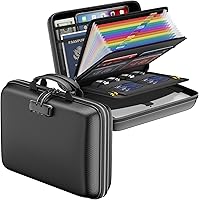
Home Safe vs Safe Deposit Box: Which Is Better? (October 2026)
For home safe vs safe deposit box, choose a home safe for items you need quickly and a bank box for rarely needed items you want stored off-site. Use both when your belongings have different access needs.
On this page (8 sections)
- Home safe vs safe deposit box: which gives easier access?
- How do fire, flood, and theft risks compare?
- What does each option cost over time?
- Which of these home safes suits your routine?
- How should you set up a home safe?
- How should you organize a bank safe deposit box?
- Which storage mistakes cause avoidable problems?
- Home safe vs safe deposit box: make the final choice
A home safe wins for quick access, while a bank safe deposit box suits rarely needed items stored off-site. The home safe vs safe deposit box choice starts with when you need an item, then the protection it needs.
You may benefit from both, especially if one household event could destroy your originals and copies together. Separate urgent records from long-term storage before choosing a container.
A home depository safe is different from a bank safe deposit box. Its deposit drawer stays in your home or business and does not provide off-site storage.


Home safe vs safe deposit box: which gives easier access?
A home safe gives you access on your schedule; a bank box ties retrieval to the bank's access process. That difference matters most for items you might need tonight or before an early trip.
At home, you control the code or key and decide who can open the safe. At a bank, confirm opening hours, appointment needs, identification requirements, and who is formally authorized to enter the box.
Distance matters, too. A branch near work may be convenient now but less useful after a move, a job change, or a disruption that closes nearby roads.
Which items need home safe access rather than a bank box?
Keep an item nearby when a delay could disrupt travel, a repair, or an urgent household decision. A passport needed at short notice and insurance information needed after damage both deserve an access plan.
That does not mean every original must stay home. You may only need an accessible copy or reference number to begin a claim or contact the right organization.
Our guide to storing important documents at home explains how to organize records and keep useful copies available. Keep emergency contact details somewhere you can reach even if the safe itself becomes inaccessible.
Who should skip a bank box?
Skip a bank box for anything you may need outside branch access hours. It is also a poor fit if getting to the branch is difficult or you cannot arrange suitable authorized access.
Avoid making it the only route to instructions someone needs when you are unavailable. Ask the bank what access arrangements apply in that situation before depositing essential originals.
Who should skip a home safe?
Skip a home safe as your only storage plan if you need separation from household risks. A safe inside the house still shares its location with your other belongings and records.
Renters should also think through permitted mounting and future moves. If you cannot install the chosen model properly, choose another location or storage approach.
How do fire, flood, and theft risks compare?
A home safe protects within its documented limits, while a bank box separates belongings from events at your home. Neither choice removes every risk.
Decide what loss you are trying to prevent first. Keeping visitors away from jewelry, protecting paper during a fire, and separating originals from household copies are different jobs.
Fire and water protection need separate checks
A fire classification does not automatically establish water protection. Likewise, locked steel storage does not establish either one.
The SentrySafe SFW123DSB is UL Classified for 1 hour at 1700°F and ETL Verified for 24 hours in water up to 8 in deep. These are defined protection conditions, not unlimited protection against any fire or flood.
Our fireproof home safe guide explains how to compare protection with your storage needs. Read what a fireproof safe can and cannot protect before treating the label as a promise.
Match protection to the contents, too. Do not assume a safe suitable for paper will protect every hard drive, photograph, or other heat-sensitive object.
Theft protection depends on installation
A home safe adds a locked barrier, but a movable safe can be carried away for later entry. Construction and mounting therefore deserve attention alongside the lock.
Look for a location that supports proper anchoring without making normal use awkward. Hiding a safe does not replace securing it.
Off-site storage removes valuables from a household burglary, but it also puts access and facility security outside your control. Ask the bank about its procedures and what happens if the branch becomes unavailable.
Insurance is a separate decision
Do not assume either storage option includes insurance for its contents. Ask your insurer about coverage, documentation needs, and any conditions tied to where an item is kept.
Keep proof of ownership and an inventory separately from the valuables. A safe replacement promise also differs from reimbursement for everything inside it.
What does each option cost over time?
Compare the full cost of keeping and using each option, including installation or recurring fees. A cheaper container is poor value if its access pattern or protection does not fit.
For a bank box, ask about rental fees, renewal terms, key replacement charges, and the process for closing the service. Include travel time if you expect regular visits.
For a home safe, consider delivery, any help needed to move it, and installation. Electronic models also need battery care, while moving house may mean moving and anchoring the safe again.
Size affects both choices. Allow room for likely additions, but do not pay to store old paperwork that you no longer need.
Which of these home safes suits your routine?
Choose the SentrySafe for document protection, the Amazon Basics for everyday locked storage, or the VEVOR for deposits without main-door access. All three remain on-site and serve different routines.
Start with the task rather than the largest capacity. More interior space will not solve an access problem or add a missing fire classification.
SentrySafe SFW123DSB: household papers kept nearby
The SentrySafe fits households that want important documents close at hand with documented fire and water protection. Its dial combination access suits someone comfortable following a dial sequence.
The 1.23 cu ft interior includes a shelf, and bolt-down hardware is supplied. At about 86 lb, it needs a planned location and a workable route through the home.
Measure your document folders against its 12.6 in width, 11.9 in depth, and 13.8 in height. A folder's tabs, fasteners, and cover can take more room than the loose sheets inside.
Skip this model if you need a safe you can move frequently or your document holders do not fit. Its weight also makes checking stairs, clearances, and placement sensible before delivery.
Amazon Basics 1.8 Cu Ft Safe: frequent household access
The Amazon Basics suits someone who wants a keypad and organized space for valuables used regularly. An interior shelf helps separate small items from document stacks.
Its construction includes an 8-gauge steel door, a 14-gauge steel body, 2 live-door bolts, and concealed hinges. It includes pre-drilled mounting holes and hardware for floor or wall installation.
The keypad needs AA batteries, which are not included, and a backup key provides another access route. Plan secure key storage outside the safe.
Skip it when documented fire or flood protection is your main requirement. Its capacity and steel construction do not establish those protections.
VEVOR Digital Depository Safe: controlled cash drops
The VEVOR fits a small business or home office where someone needs to deposit items without opening the main compartment. That separation can simplify a routine with different people handling deposits and retrieval.
Its electronic lock supports 2 sets of codes, and 2 emergency keys are included. The deposit drawer has a saw-tooth edge tilting baffle intended to resist fishing contents back out.
Use a clear record of deposits and arrange regular collection by the person responsible. A deposit drawer does not replace keeping track of what went in.
Skip this design for ordinary household filing if you have no deposit routine. Do not choose it for heat-sensitive originals without a suitable documented fire classification.
For more choices, see the home safes guide. Our guide to choosing a home safe helps match the container to its purpose.
How should you set up a home safe?
Choose a usable location and suitable mounting surface before loading the safe. You should be able to open the door fully and retrieve a folder without emptying the compartment.
Measure the route into the room as well as the final space. Allow for door swing, keypad or dial access, and enough light to read labels.
Check actual folders and containers against usable interior dimensions. Our safe sizing guide helps you plan space around the items you own.
Install it according to the model's instructions
Follow the instructions for the specific safe and the surface you are attaching it to. Do not assume supplied anchors suit every wall or floor material.
Check for pipes and wires before drilling, and get installation help if the mounting surface is uncertain. Do not add holes or change seals to make a safe fit.
Establish access before adding valuables
Practice opening and closing the empty safe until the process is familiar. For an electronic model, follow the instructions for setting a code and checking access with the door open.
Keep emergency keys outside the safe in a separate secure location. Store the combination securely, and give authorized users a clear access process.
Follow the manual's guidance for batteries, moisture control, and cleaning. Periodically check that papers are dry, access works, and the door closes without pressing against crowded contents.
How should you organize a bank safe deposit box?
Keep a separate inventory and a clear retrieval plan for everything placed in the box. Off-site storage becomes less useful when you forget what is there or who can retrieve it.
Before renting, ask about available box dimensions and permitted contents. Confirm that the items fit without folding or forcing them.
Use labeled folders or sleeves to group records, and keep copies where they are useful. Record what you add or remove so your home inventory stays accurate.
Review authorized access arrangements and contact details when your household changes. Ask how closures, relocation, lost keys, or ending the rental would affect retrieval.
Which storage mistakes cause avoidable problems?
The biggest mistakes are storing every copy together and choosing protection without considering access. A container can suit one item well and be wrong for another.
- Keeping originals and all backups in one place: Separate copies from the event that could damage the originals.
- Storing a safe's emergency key inside it: Keep the alternative access route available when the main method fails.
- Buying by exterior size: Insulation, walls, shelves, and door clearance reduce usable space.
- Confusing a deposit safe with a bank box: A home drop safe remains exposed to events at its location.
- Overfilling the compartment: Leave enough space to find and remove one item without disturbing everything.
- Choosing a lock and ignoring hazards: Check fire, water, and theft needs separately.
Our guide to what belongs in a home safe can help you sort belongings before you fill either container.
Home safe vs safe deposit box: make the final choice
Choose a home safe when retrieval cannot wait, a bank box when off-site separation matters, and both when your items need different arrangements. Do not force your whole household into one storage choice.
For a home safe, pick the SentrySafe for household document protection, Amazon Basics for regular locked storage, or VEVOR for a cash-drop routine. Skip any model whose purpose does not match the items you need to protect.
Before buying or renting, make a short inventory with 3 notes per item: how quickly you need it, whether a copy will do, and where its backup belongs. That turns the home safe vs safe deposit box question into a practical plan.
Use our guide to storing important documents at home to organize the records you decide to keep within reach.
Frequently asked questions
Is a home safe better than a safe deposit box?
A home safe is better for quick access, while a safe deposit box suits items you rarely need and want away from home. Choose item by item: consider retrieval time, the consequences of losing an original, and the protection offered by the exact safe or bank service.
What should you keep in a safe deposit box?
Keep rarely needed originals or valuables in a safe deposit box when you can wait for a bank visit to retrieve them. Check the bank's rules for permitted contents and authorized access first, then keep a separate inventory and accessible copies of records you may need sooner.
Are home safes fireproof?
Some home safes offer a fire classification under defined conditions; others provide locked storage without documented fire protection. Match the classification to the contents, duration, and temperature involved.
Paper protection does not automatically establish protection for every digital storage device, photograph, or other heat-sensitive item you place inside.
Can a safe deposit box protect items from fire or flood?
A safe deposit box moves belongings away from a fire or flood at your home, but the bank's location can face its own hazards. Ask about the facility, service terms, and insurance arrangements.
Do not treat off-site storage as a promise that contents will remain undamaged.
Should you use both a home safe and a safe deposit box?
Use both when urgent records need to stay accessible and rarely needed originals can remain off-site. Divide items by retrieval needs rather than putting everything valuable together.
Keep an inventory outside either container, and give the appropriate person a clear way to find essential information if you cannot.